

04 Nov 20 Years. 20 Stories: When Complexity Becomes Invisible
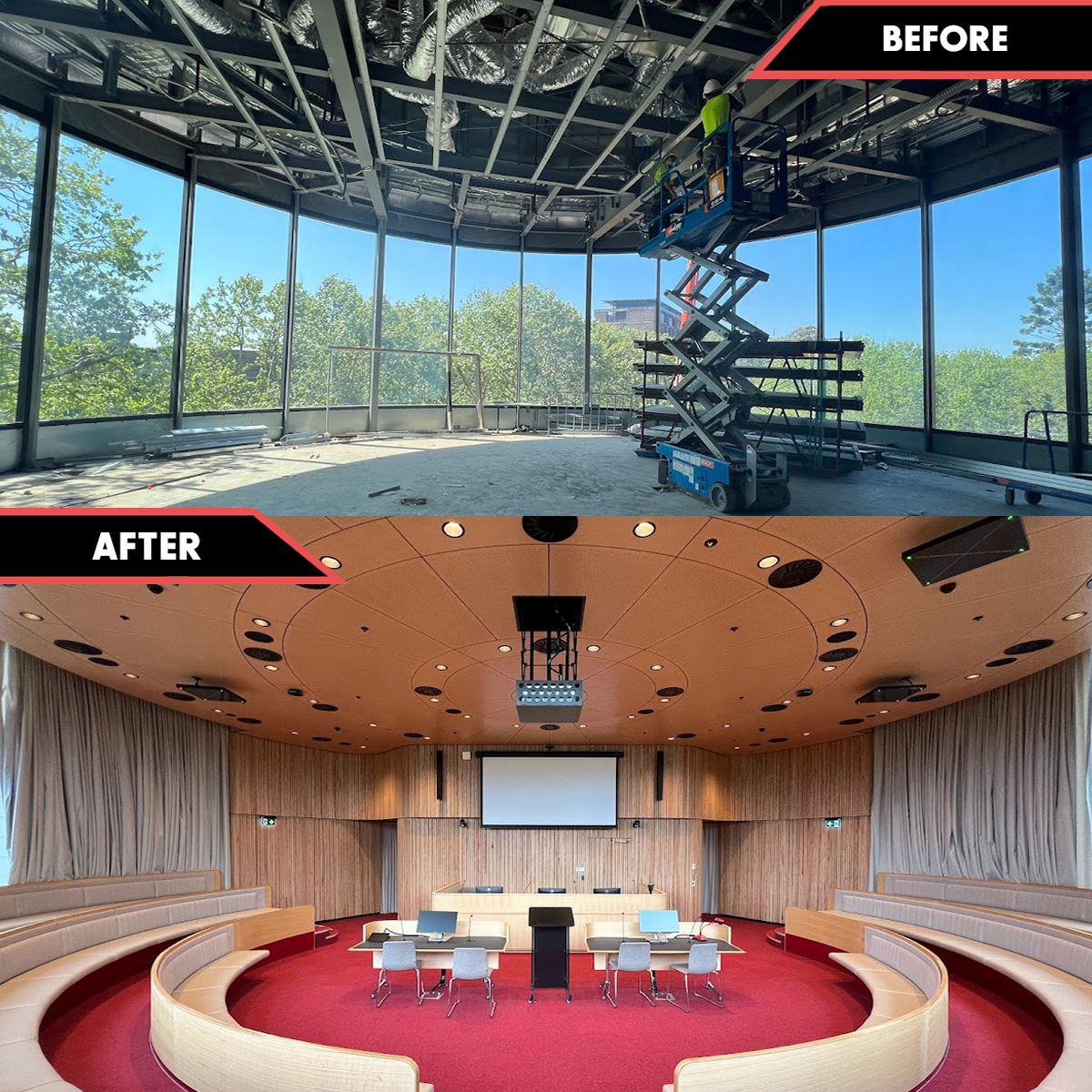
Macquarie University’s Michael Kirby Building
Over 20 years, audiovisual technology has changed in ways that would have been difficult to imagine when Concept AV first began its journey.
Screens became smarter. Rooms became connected. Video moved onto the network. Collaboration stopped being confined to the people physically sitting around a table. Users began expecting to move between in-person, remote and hybrid environments without thinking about what was happening behind the scenes.
But perhaps the biggest change has been something less visible: Expectations changed.
Today, the more sophisticated the technology becomes, the less people want to notice it. They simply expect to walk into a space, start a class, join a meeting, share an idea or collaborate with someone on the other side of the world and have everything work.
That is what makes Macquarie University’s Michael Kirby Building such an important story in Concept AV’s first 20 years.
Not simply because of the technology inside it, or the scale and complexity of the integration, but because the project represents how far the role of the AV integrator has evolved.
And, in many ways, how far Concept AV has evolved with it.
The Industry Grew Up
A successful AV installation once came down to a few questions:
- Was the display mounted properly?
- Could people see the presentation?
- Did the audio work?
- Was everything finished on time?
Those fundamentals still matter.
Over two decades, AV environments have become more sophisticated. AV now intersects with networks, software, security, collaboration tools, remote monitoring and an organisation’s broader digital infrastructure.
Concept AV began in supply and installation, then expanded into design, automation, engineering, control, project delivery, commissioning and ongoing support.
Macquarie University’s Michael Kirby Building shows where that journey has led: audiovisual technology is part of how the building functions.
A Different Kind of Learning Environment
Macquarie University Law School has a history of approaching legal education differently, and its new home needed to reflect that ambition.
The project was the first and largest end-to-end Q-SYS ecosystem deployment at an Australian university.
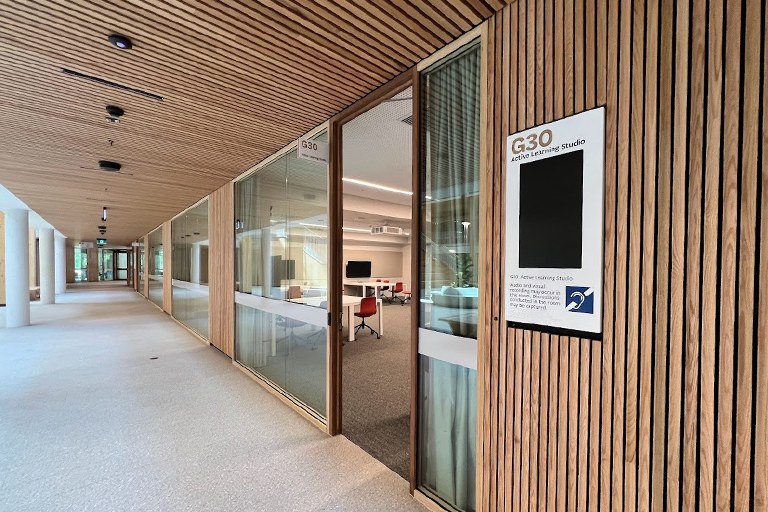
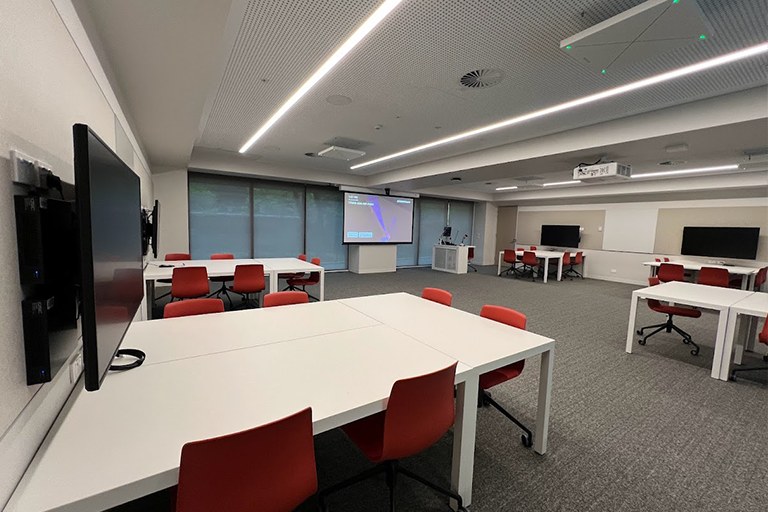
The 8,600-square-metre Michael Kirby Building brings together teaching spaces, academic offices, collaborative environments, lecture facilities, the Law Commons and a purpose-built Moot Court. Planned and built during the COVID-19 years, it took shape as universities were rapidly reconsidering how, where and when students might participate in learning.
That timing mattered.
By then, the question was no longer simply how to equip a classroom; universities had to think about students in the room and students somewhere else. Live participation and recorded participation. Traditional teaching and active learning. Physical spaces that might need to support completely different modes of engagement from one hour to the next.
As Concept AV Customer Solutions Specialist Adrian Caltabiano put it during the project: “Flexibility was key.”
Three words, but they capture much of what modern AV integration has become.
Because flexibility sounds simple until you have to engineer it.
The Paradox of Modern AV
There is an interesting contradiction at the heart of projects like this; the system behind the user experience has become significantly more complex. Yet the experience itself has to become simpler.
Consider what is happening when an academic walks into a modern learning environment. Behind a relatively simple interface, audio may need to be captured from different areas of the room. Cameras may need to respond to whoever is speaking. Content may need to move between different displays or spaces. A session may need to be streamed, recorded or shared with remote participants. Multiple systems need to communicate across the university network.
The person teaching the class should not need to understand any of that; they have something more important to think about. Teaching.
That is one of the clearest markers of how Concept AV’s role has changed over 20 years.
The job is no longer simply to make technology work; it is to make considerable technological complexity feel uncomplicated.
At the Michael Kirby Building, a building-wide Q-SYS platform integrates audio, video, and control, while Sennheiser microphone technology ensures clear audio capture across specialised environments. The underlying systems are sophisticated, but the interfaces presented to teaching staff are deliberately simple.
When that balance is right, the user does not experience the engineering. They experience confidence.
When the Space Becomes Part of the Education
Nowhere is that more obvious than in the building’s Moot Court. It would have been easy to think about the room as another specialist teaching space requiring cameras, microphones and displays, but that misses the point.
The Moot Court exists to simulate an environment students may encounter in their future careers. Technology, therefore, becomes part of the learning experience itself.
Students can develop advocacy skills in a setting designed to reflect contemporary court environments, while the space can also support participation in broader mooting activities.
The technology is there to help make the simulation more authentic, not to distract from it, and that distinction matters. It represents a broader change across the AV industry.
Great technology is increasingly judged not by how impressive it looks in a rack or how many features appear on a specification sheet, but by what it allows people to do.
Can students collaborate more effectively?
Can an academic teach in the way that best suits the material?
Can somebody participate remotely without feeling like an afterthought?
Can the people responsible for the building support the technology efficiently?
Those are experience questions before they are technology questions, and they are increasingly the questions Concept AV is being asked to answer.
From Individual Rooms to Connected Ecosystems
Another significant change over Concept AV’s 20 years has been the shift away from thinking about spaces in isolation. The meeting room, classroom, or lecture theatre is no longer its own technological island.
At Macquarie University, content can move beyond the room in which it originates. Teaching environments can support local use, sharing between spaces, capture via the university’s Echo360 lecture capture platform, and participation via platforms such as Zoom.
That brings AV directly into another world that has transformed dramatically over the past two decades: IT.
Once AV begins travelling across an organisation’s network, the integrator’s responsibility changes again. It is no longer enough for the audiovisual system itself to work; it must coexist with the broader technological environment around it.
For the Michael Kirby Building, that meant engaging with Macquarie University’s network requirements well before installation. A proof of concept was undertaken with Q-SYS and the university network team to demonstrate how video traffic could be managed without creating unnecessary pressure on the underlying network.
It is the kind of work most students walking through the building will never know happened, which is exactly the point. Some of the most important work on a modern AV project is the work an end user will never see.
The Project Does Not End at Handover
Twenty years ago, the traditional concept of project completion was also clearer: Install the equipment. Commission it. Hand over the room. Done.
Modern connected environments have changed that relationship, too.
When technology becomes central to how an organisation teaches, works and collaborates, supporting it across its lifecycle becomes just as important as installing it correctly in the first place.
The Michael Kirby Building incorporates remote monitoring and management via Q-SYS Reflect Plus, giving Macquarie University’s AV team greater visibility into the environment and enabling relevant information to be shared with Concept AV when support is required.
That may not be the most visible part of the project, but it is one of the most telling. Because it reflects another important chapter in Concept AV’s evolution: the move towards supporting the complete lifecycle of a technology environment rather than viewing installation as the finish line.
That same philosophy continues to shape the business today, with Concept AV investing further in service, support and long-term client relationships.
Technology Changes. The Standard Shouldn’t.
Looking back across 20 years, there is plenty of technology to talk about. Products have disappeared, systems have moved onto networks, and remote collaboration has become an everyday expectation.
AI, software and smarter monitoring will keep changing how connected buildings work. The technology inside a university building 10 years from now will look different again.
But some things should not change:
- A system still needs to work when people need it.
- It still needs to be designed around the people using it.
- It still needs to be delivered properly.
- And somebody still needs to take responsibility for the outcome.
The technology will keep getting more complex. The goal stays simple: make the space work for the people inside it.
Twenty Years of Progress, Hidden in Plain Sight
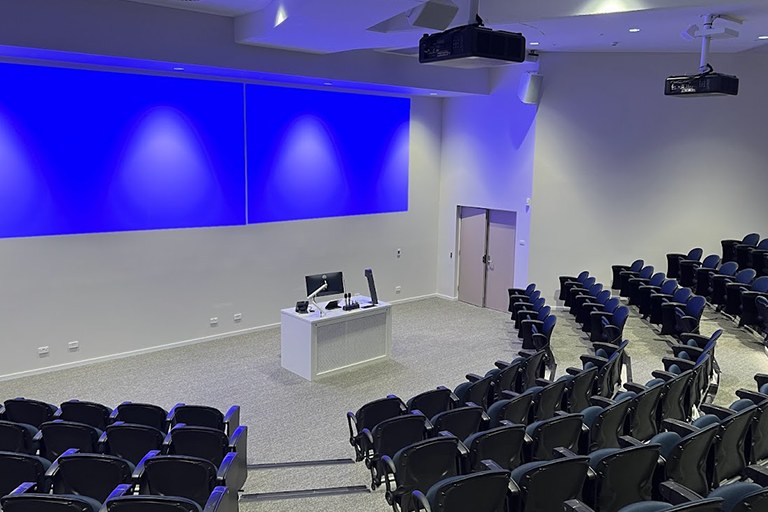
Thousands of students and staff will move through the Michael Kirby Building.
Most will never think about the network architecture carrying video through the facility. They will not think about beamforming microphones, codecs, control programming or remote system monitoring.
They should not have to. They will walk into a room, use the technology and get on with what they came there to do.
For Concept AV, there is something fitting about that. Twenty years of building knowledge, capability, partnerships, and technical expertise can ultimately culminate in an experience in which all that complexity almost disappears.
That is not technology becoming less important; it is technology becoming better integrated into people’s lives.
And perhaps that is one of the clearest ways to measure just how far the industry, and Concept AV, have come.
Explore the Full Macquarie University Case Study
This story is just one perspective on the Michael Kirby Building and what the project represents in Concept AV’s 20-year journey.
Want to see how the environment was brought to life?
Explore the full Macquarie University case study to discover how Concept AV helped create flexible, connected and intuitive learning environments for the next generation of legal education.