
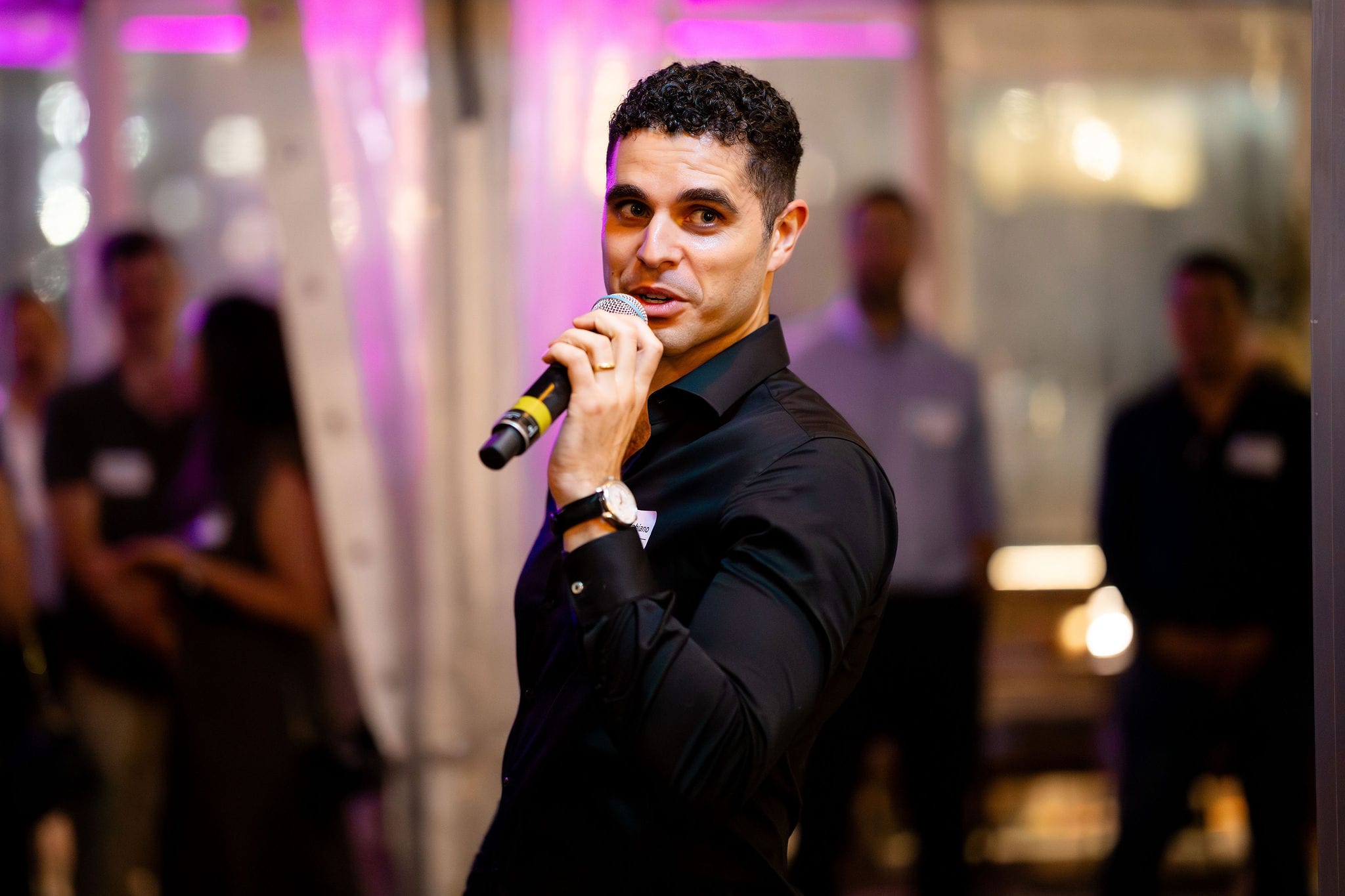
03 Nov 20 Stories. 20 Years: Beyond the Handover, Adrian Caltabiano and the Relationships That Keep Growing
When Adrian Caltabiano talks about the moments in his career that have meant the most, he does not point first to a big project or a complex system.
He talks about relationships.
The customer who still calls after the project is finished. The one who wants to catch up for a coffee. The one who trusts Concept AV enough to introduce the team to someone else.
For Adrian, that is what success looks like.
“Those sorts of relationships are the things that I really appreciate within my role,” he says. “It’s not just being able to do a job and walk away.”
That way of thinking has become increasingly important to Concept AV as the business enters its next chapter.
For much of its first 20 years, Concept AV built its reputation through strong project delivery. But as workplace technology has become more connected and customer expectations have changed, the relationship with the client increasingly needs to continue long after handover.
Adrian’s own career reflects that shift.
From installation to customer relationships
Adrian did not start out planning a career in AV integration.
His background was in music and sound design, and his first exposure to professional AV came through a short-term production technician role supporting corporate meeting environments.
When he later joined Concept AV, he entered a part of the industry he had barely encountered before.
“I didn’t necessarily understand too much what I was getting into because I hadn’t heard of integration,” he says.
He started as an installation technician, learning the construction and infrastructure side of AV first-hand.
Around seven months later, he moved into the office to assist with administrative work while the team was stretched.
That move quickly turned into something bigger.
Tom Squillacioti had been assigned a two-floor fitout in the city, and Adrian joined him on site. He attended meetings, asked questions and showed he was eager to take responsibility.
Tom gave him the opportunity.
That project became Adrian’s first real step into project management.
“Enthusiasm and willingness within Concept gets very recognised by management,” Adrian says.
From there, his role continued to evolve.
Installation led to project management. Project management led to stronger customer relationships. Those relationships then opened the door to account management, sales and a more commercial role.
Today, as a Customer Solutions Specialist, Adrian sits much closer to the full customer lifecycle.
The value of staying involved
Some of Adrian’s most important lessons have come from difficult projects.
He recalls one project delivered over the Christmas period under intense time pressure.
At the time, the experience was stressful. But the outcome became much more important than the difficulty itself.
By staying close to the customer, representing their needs internally and focusing on solving the problem rather than simply finishing the job, Adrian helped build trust.
That trust grew into an ongoing service relationship.
It later led to referrals and further opportunities.
For Adrian, that is a better measure of success than simply delivering a project and moving on.
The goal is to reach the point where the customer no longer sees Concept AV as the company that once installed their technology.
They see someone they can call.
“When they have questions, the first person they’re going to ask is Adrian or Concept AV,” he says.
That experience also made him think more deeply about what should happen after handover.
Making service part of the journey
When Adrian first became more involved in service, Concept AV was still heavily project-led.
The business had existing service relationships, but the path from project delivery into ongoing support was not always clearly defined.
After one challenging project, Adrian was encouraged to discuss ongoing service with the customer.
That led to a simple question:
What did that process actually look like?
“What documents do we have? What processes do we have? How can I ask the qualifying questions to get there?”
From there, Adrian began looking more closely at how customers were onboarded, what information they needed and who owned the relationship internally.
The answer was not to make service more complicated.
It was to make it more deliberate.
If Concept AV wanted stronger long-term customer relationships, ongoing support could not simply be an optional conversation at the end of a project.
It needed structure, ownership and a clearer customer journey.
Moving beyond “set and forget”
That shift is also being driven by the technology itself.
Workplace AV is no longer a collection of isolated devices.
Meeting rooms now sit across networks, cloud platforms, software, control systems and collaboration tools.
That makes the traditional “install it and walk away” model less relevant.
Customers need ongoing guidance.
They need to understand what they have, how to get the best from it and what new capabilities may become available over time.
Sometimes the technology is technically working, but the customer is still not getting the value they expected.
That is where Adrian sees Concept AV playing a bigger role.
Not just fixing faults.
Helping customers improve the experience.
From service to experience
One idea Adrian has been exploring internally is the difference between a traditional Service Level Agreement and a more experience-led model.
He is careful not to present an Experience Level Agreement as a finished Concept AV product, but the thinking behind it is important.
Traditional service often starts when something goes wrong.
A fault occurs. A ticket is raised. Someone responds.
An experience-led approach asks a broader question:
Is the workplace actually working well for the people using it?
That means looking beyond response times.
It means understanding how rooms are being used, whether systems are performing properly and where customers might get more value from their technology.
For Adrian, the direction is increasingly proactive rather than reactive.
The aim is not just to restore a system after a problem occurs.
It is to help create a workplace where fewer problems get in the way in the first place.
Becoming part of the customer’s team
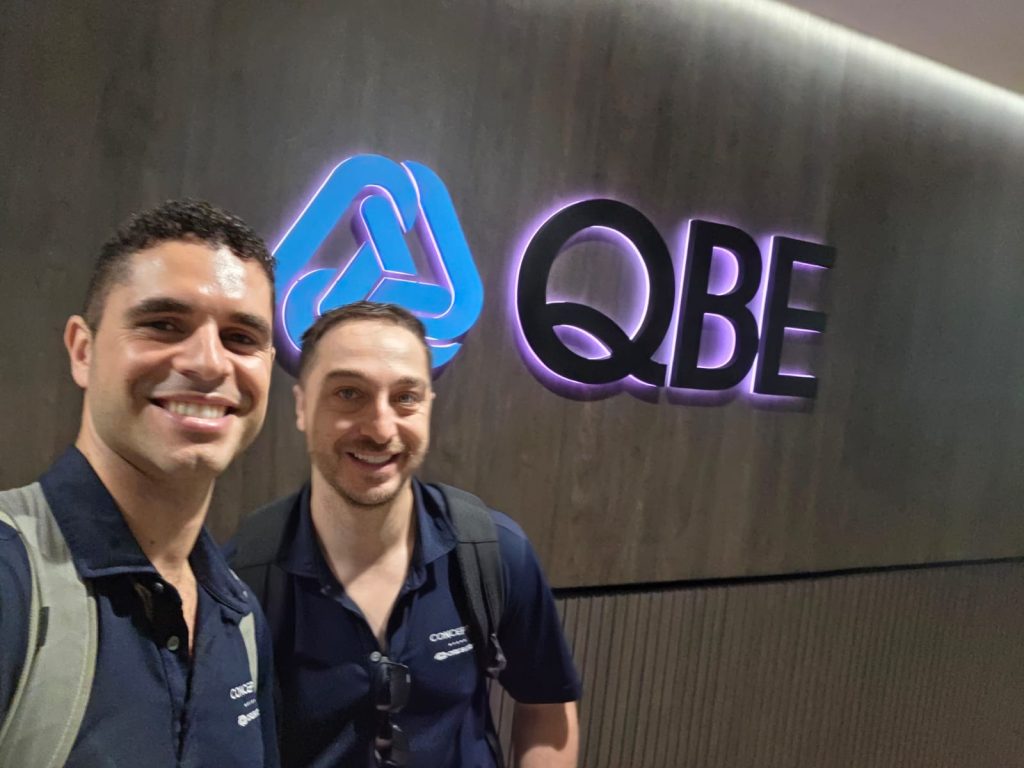
Concept AV’s relationship with QBE gives Adrian one of the clearest examples of what this can become.
The original relationship predates his time with Concept AV, and he is quick to acknowledge the work of those who built it.
But the way the relationship has continued to grow demonstrates the value of staying close to the customer.
An initial service agreement covering three locations expanded into a broader three-year arrangement across seven locations.
More importantly, Concept AV became involved earlier in future conversations.
Instead of only being approached after a project had already been fully defined, the team could be brought in while the customer was still considering what to do.
That creates a very different relationship.
“You get super early engagement,” Adrian says. “It’s almost like they’re a part of us now.”
Projects, service and future planning stop becoming separate transactions.
They become part of the same partnership.
Looking towards the next 10 years
Adrian is also part of a younger generation helping shape what Concept AV looks like beyond its first 20 years.
He sees stronger partnerships, broader capability and continued national growth.
He sees service becoming more proactive.
And he sees Concept AV continuing to move closer to its customers.
But growth, for Adrian, should not come at the expense of the relationships that made it possible.
Asked what he would like Concept AV’s 30th anniversary to look like, his answer came back to people.
“I would want to see a lot of familiar faces. I would want to see a lot of new faces too.”
The familiar faces matter.
They represent customers who stayed.
Relationships that deepened.
People who continued to trust Concept AV as their workplaces changed.
“I would want to see that our ability to connect with people wasn’t compromised in that growth period.”
That is ultimately the direction Adrian wants to help build.
A business that continues to grow.
A service model that continues to evolve.
And customer relationships that do not finish when the project does.
Because delivering the technology matters.
What happens after the handover can matter just as much.